We’re always up for a challenge here at Paradigm and we do love it when clients come to us with ambitious ideas.
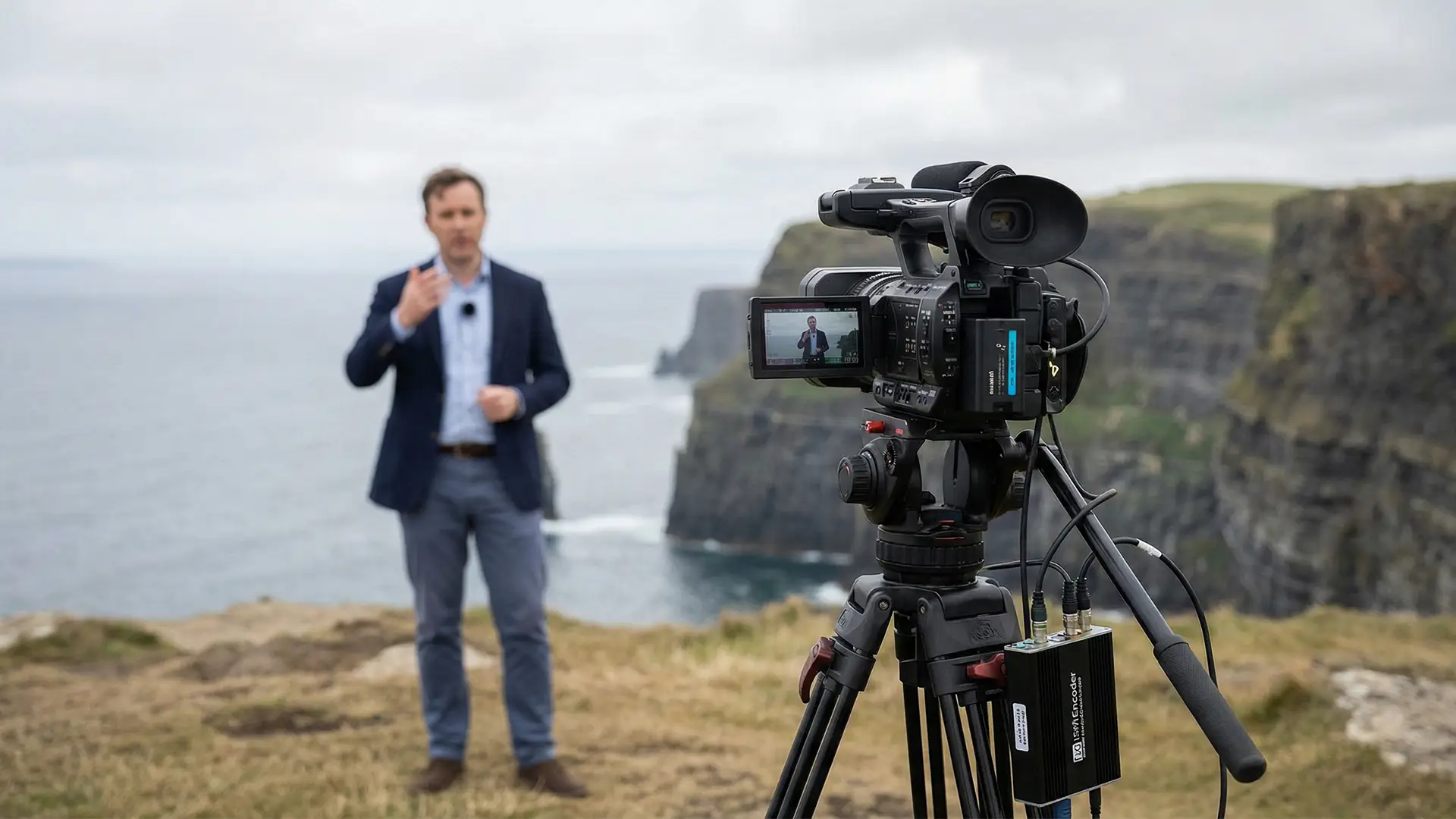
Some want to livestream from remote locations. Others want to broadcast from busy city centres, outdoor venues or places that look great on camera but weren’t designed with live video in mind.
One client recently asked to deliver a series of live shoots from locations with little to no fixed internet - but they were worried about a gamble. This is a very common concern for internal communication teams, marketing managers and agencies running live events.
But the good news is there is a positive answer to the dreaded question… What if the internet isn’t good enough?
What happens when a livestream relies on one connection?
When a livestream depends on a single internet connection, you can be exposed. If that connection is weak, congested or unavailable, problems can appear.
The stream may freeze or buffer. Audio can drop out. Viewers may be kicked out entirely. Even short interruptions distract from the message and break momentum.
For internal communications, this can be damaging. Leadership updates, employee town halls and crisis messages need clarity and consistency. When the stream fails, people miss information and confidence in the channel drops, with presenters feeling the heat.
This is especially challenging for small internal comms teams. In many organisations, one person is responsible for strategy, stakeholder management, content creation and channel delivery. But the technical risk shouldn’t sit with them alone.
A positive way to think about livestream internet.
Over the years, we’ve worked with our partners to develop a number of technical solutions that tackle this problem head-on.
And the idea is simple. Do not rely on one type of internet connection.
Instead, create a setup that can draw from multiple sources. That includes wired internet where available, mobile data connections such as 4G and 5G, and satellite services like Starlink. Each operates independently. If one struggles or drops, another takes over.
The viewer doesn’t notice but the stream continues.
Why multiple connection paths matter.
The main thing to note is that no single connection type works everywhere.
Wired internet is often fast and reliable, but it can be shared across venues, impacted by outages, or limited on upload speed. Mobile networks are flexible and widely available, but they suffer in dense cities, at large events, or during peak usage. Satellite connections such as Starlink work in places where other options fail, but they rely on a clear view of the sky and can fluctuate as satellites move.
When these options are combined, their strengths balance each other. If mobile data slows due to congestion, wired or satellite can carry the load. If wired drops out, mobile or satellite steps in. This approach offers confidence in places where internet conditions are unknown or change throughout the day.
This is invaluable when an event cannot be repeated.
Why this is a great solution for internal comms teams.
For internal communications teams, resilient livestream connectivity protects the message.
Live video is often used for high-stakes moments. Leadership announcements, organisational change updates, company-wide briefings and urgent communications all rely on trust. A broken stream distracts from the content and weakens credibility.
A reliable setup removes that risk. It allows teams to focus on what they are saying, not whether the technology will hold. It also reduces stress for presenters and production teams, who can concentrate on delivery rather than troubleshooting.
Over time, consistent experiences build engagement. Audiences are more likely to show up when they trust that the stream will work.
Why planning for failure matters.
We always ask venues for the widest available internet connection. Sometimes it tests well. Sometimes it drops without warning. Sometimes it works early in the day and fails once hundreds of people join the same network.
There are many reasons this happens. Venues may share bandwidth across multiple rooms. Office buildings may prioritise internal traffic. Mobile signals may fluctuate as people arrive. None of this is unusual.
What matters is preparation. With a layered system, each connection acts as a safety net. If one path fails, the system moves to the next without interruption. Without that safety net, the event pauses until the connection returns.
How you handle that moment shapes how your audience judges the event.
Making difficult locations possible.
The biggest shift we see is in how clients think about location.
Places that were once dismissed because of poor connectivity are now back on the table. Beaches, fields, industrial sites and busy city streets become viable again. This opens creative possibilities without increasing risk.
Site visits purely to test the internet can be expensive and time-consuming. A system designed to adapt on the day reduces the need for guesswork and gives teams confidence even when conditions are uncertain.
We’ve been able to use this system in the middle of nowhere on a construction site when there was no other method of connectivity.
But at the other extreme we used it at an office location where we couldn't get a wired connection in time because it was booked very last-minute.
That's a wrap.
Live video depends on connectivity. Relying on one connection is a risk you don’t need to take.
By planning for multiple internet paths using wired, mobile and satellite connections, you protect your livestream, your message and your audience experience. You also give internal comms teams the support they need when live events land on their desk.
Don’t dismiss a location because you assume the internet will be poor. There is now a way to plan around it. If you are considering a livestream from a challenging location, we’d love to help you deliver with confidence.
Share this insight:
Link copied