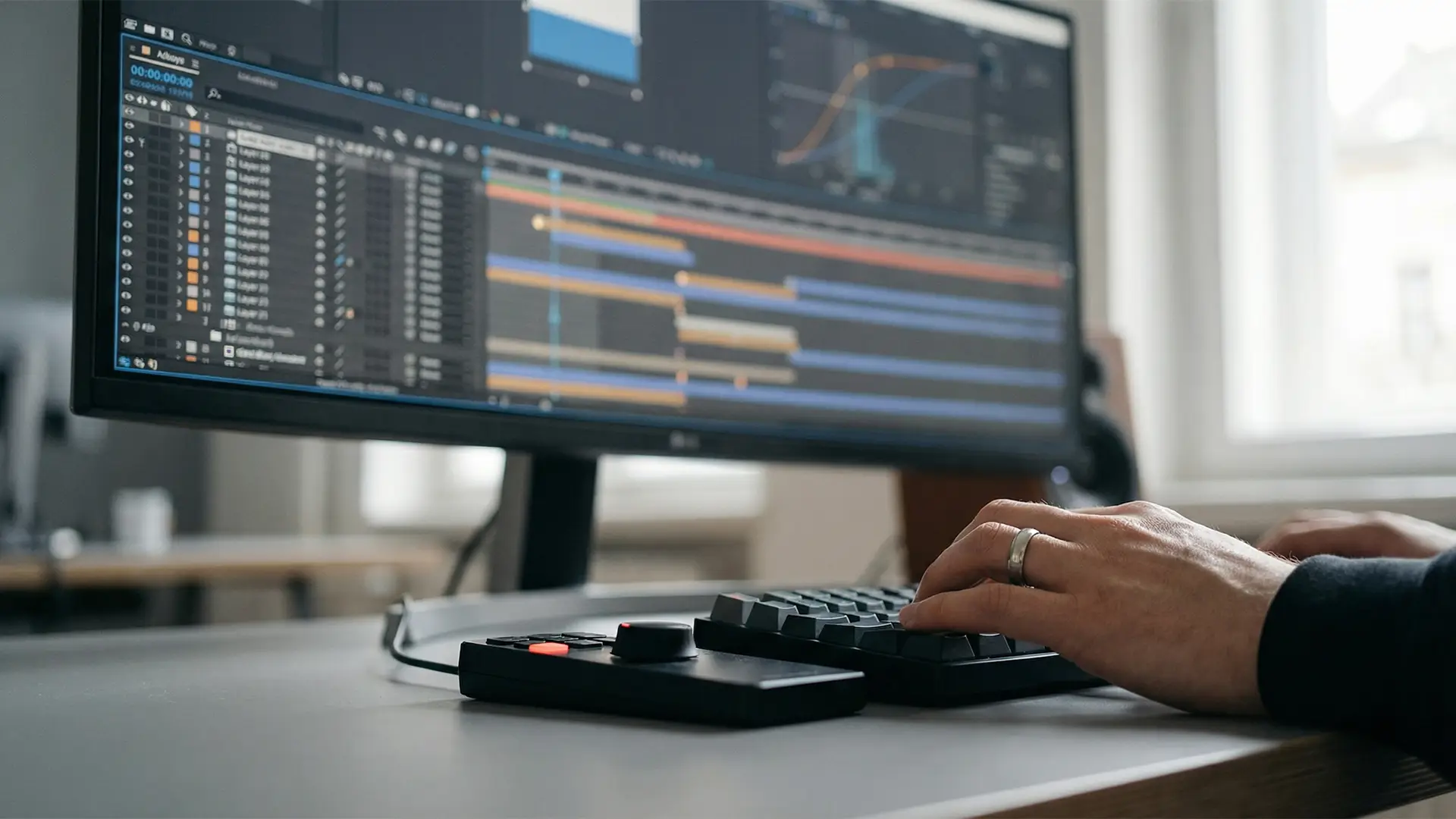
We once got a brief that made our motion graphic designer’s computer cry.
A client wanted a cinematic case study film. Think Hollywood opening titles: depth, atmosphere, dramatic lighting, slow-moving cameras through digital space.
The catch? We had to do it without a 3D pipeline, without Cinema 4D, and without the budget for the render times that kind of look usually needs.
The result was a crash course in creative problem-solving - and a reminder that limits can push your craft further than the biggest budget ever could.
The challenge.
The client’s goal was clear: a premium, cinematic video that reflected the technical sophistication of their platform.
The timeline was two and a half weeks rather than the six weeks we’d usually spend on something like this.
The question became simple: how do we create the illusion of 3D space using only 2D assets and After Effects?
The shift in mindset.
Once we stopped chasing full realism, the challenge became exciting. We focused on feeling 3D, not being 3D. That shift freed us up to use After Effects in ways it’s not usually used.
We started layering cut-out 2D images in 3D space, using After Effects’ camera and lighting tools to fake depth and parallax. Subtle light falloff and depth of field gave the scenes atmosphere and volume. Expressions helped automate small, natural motions so everything felt organic without needing to keyframe every detail.
To stay flexible, we built the project modularly. Nested compositions and control layers meant that any change a client requested would ripple through automatically. It looked cinematic, stayed editable, and didn’t melt the hardware… too much.
The project proved that cinematic results don’t always need to take months. You just need to know how to stretch what you already have.
Tailor the technique to the brief.
We see this pattern often. Clients want big-screen visuals, but the budget or timeline doesn’t quite match the ambition.
One example was an end-of-year wrap-up video for a client who works on lots of NDA’d projects. It was meant to celebrate achievements and team awards but couldn’t reveal many specifics. The concept needed to be fun and engaging, whilst telling a serious story.
We explored using stop-motion, and bought children’s toy, planes and cars to represent the projects the client couldn’t disclose. We photographed them, and built digital sprites. By combining these with motion graphics, we created a playful hybrid style that was quick to produce and memorable.
When there a constraints to work within, the creative idea doesn’t have to suffer. What changes is the technique.
Build for change from the start.
Revisions are inevitable, and they can quickly derail a timeline if the project isn’t structured to handle them. By setting up control layers and precompositions, we could update one element and have it automatically refresh across the animation.
That foresight saved days of work and kept us agile when creative changes arrived late in the process. It also gave the client confidence that their feedback wouldn’t cause chaos behind the scenes.
Sound makes it cinematic.
Visuals are half the experience. The other half is sound.
Once we layered in subtle rumbles, digital hums, and atmospheric swishes, the video came to life. Sound design added weight, rhythm, and emotion to every movement.
It’s often the difference between a nice-looking animation and something that truly feels cinematic. Plan for it early, not as an afterthought.
What the project taught us.
That project nearly broke our motion graphics designer, but it changed how we work. It reminded us that constraints drive invention, that knowing your tools matters more than owning all of them, and that building for flexibility is non-negotiable. It also reinforced that good sound design can lift even simple visuals to a higher level.
We’ve carried those lessons into every brief since, and they continue to shape how we approach complex creative asks on tight timelines.
That's a wrap.
Creativity thrives under pressure. You don’t always need bigger tools. You need better questions.
Focus on how the work should feel, not on a specific technique. Build flexibly so changes don’t break your workflow. Treat constraints as part of the creative process, not as a limitation.
Every project has its limits, but the best work often comes from pushing against them.
If you’re an internal comms manager or you’re in marketing and having to promise the impossible; know there’s always a way through. Encourage your teams to think differently, to chase believability, and to get the most from the tools already on their desks.
Share this insight:
Link copied