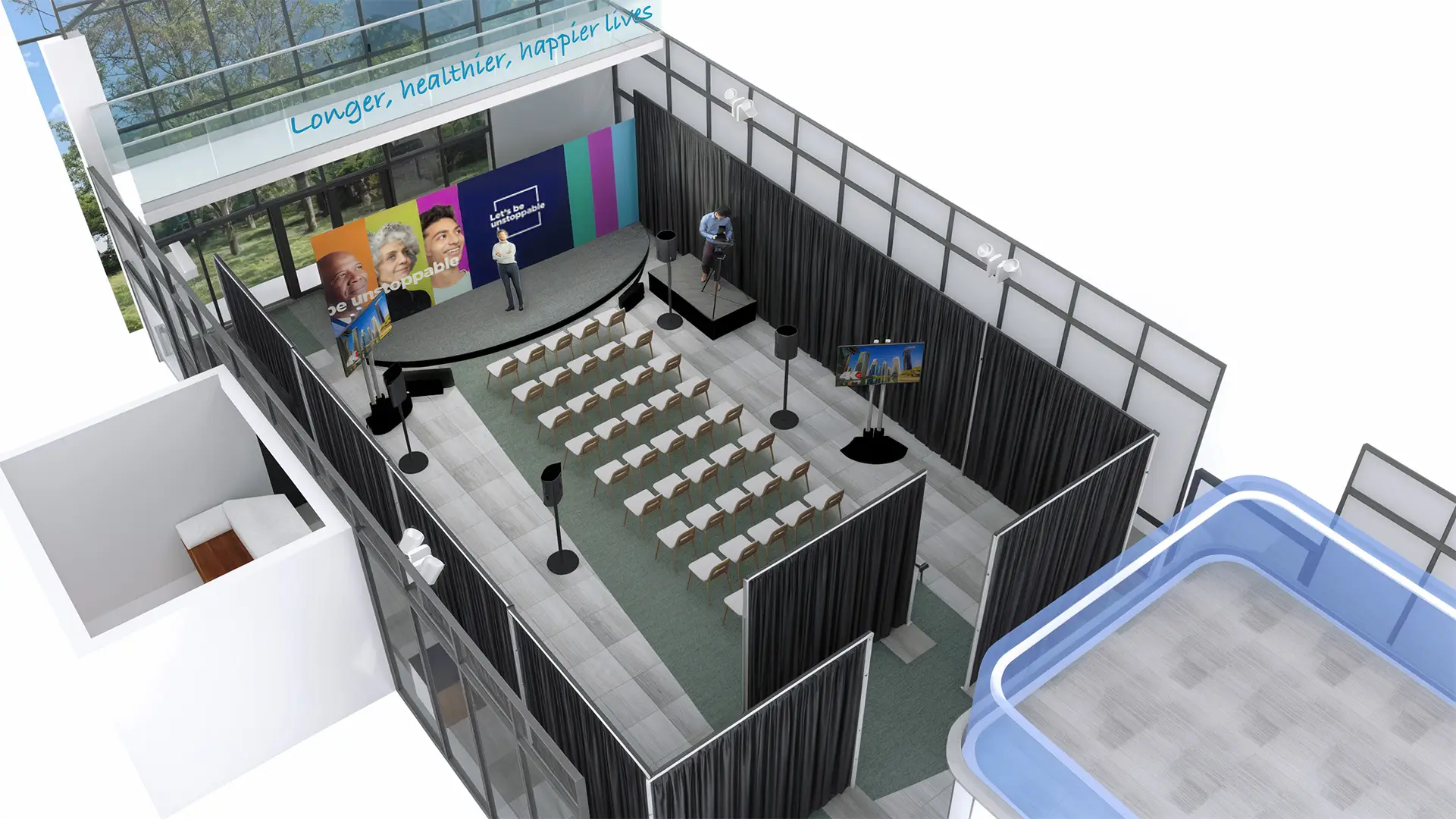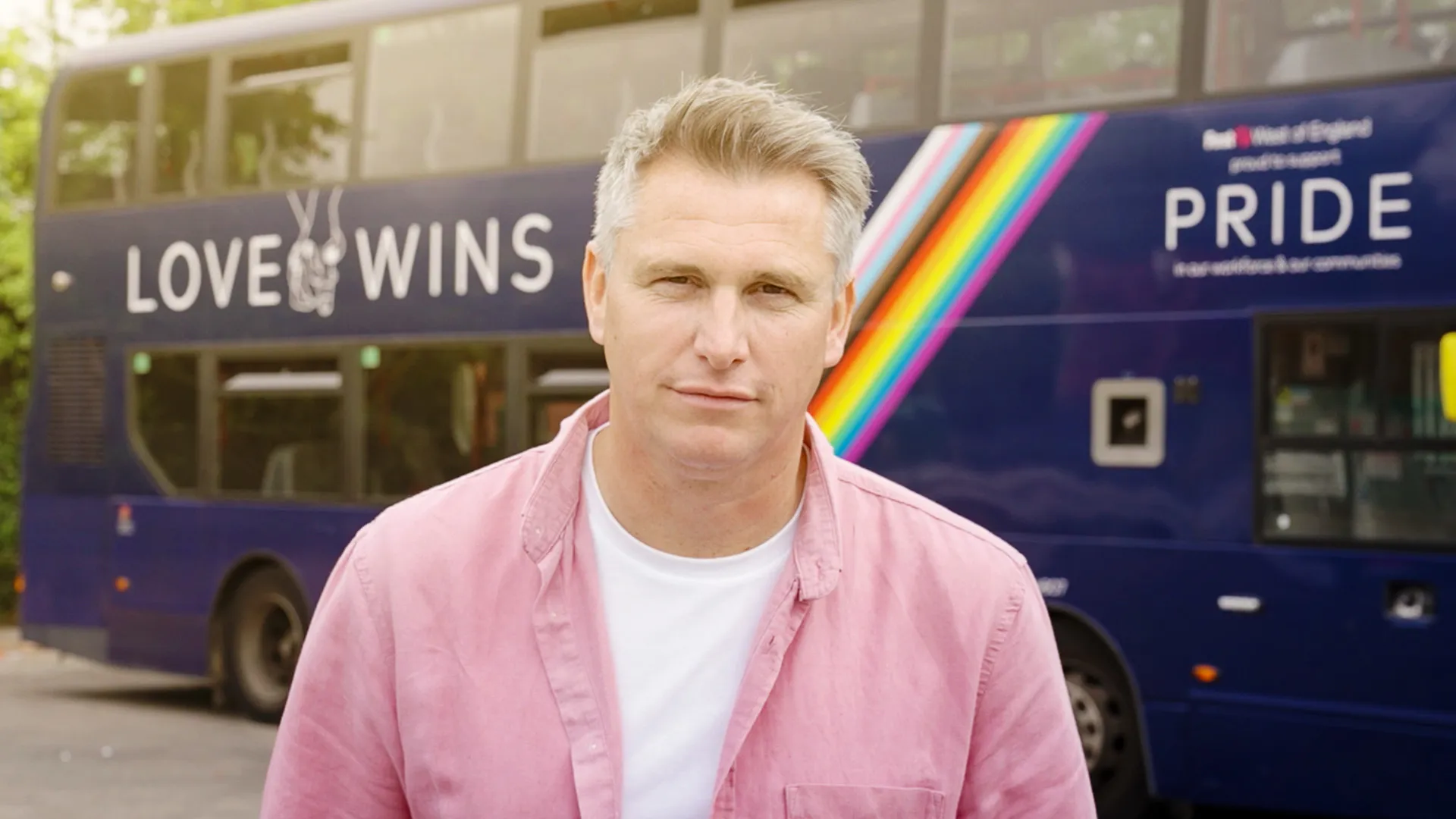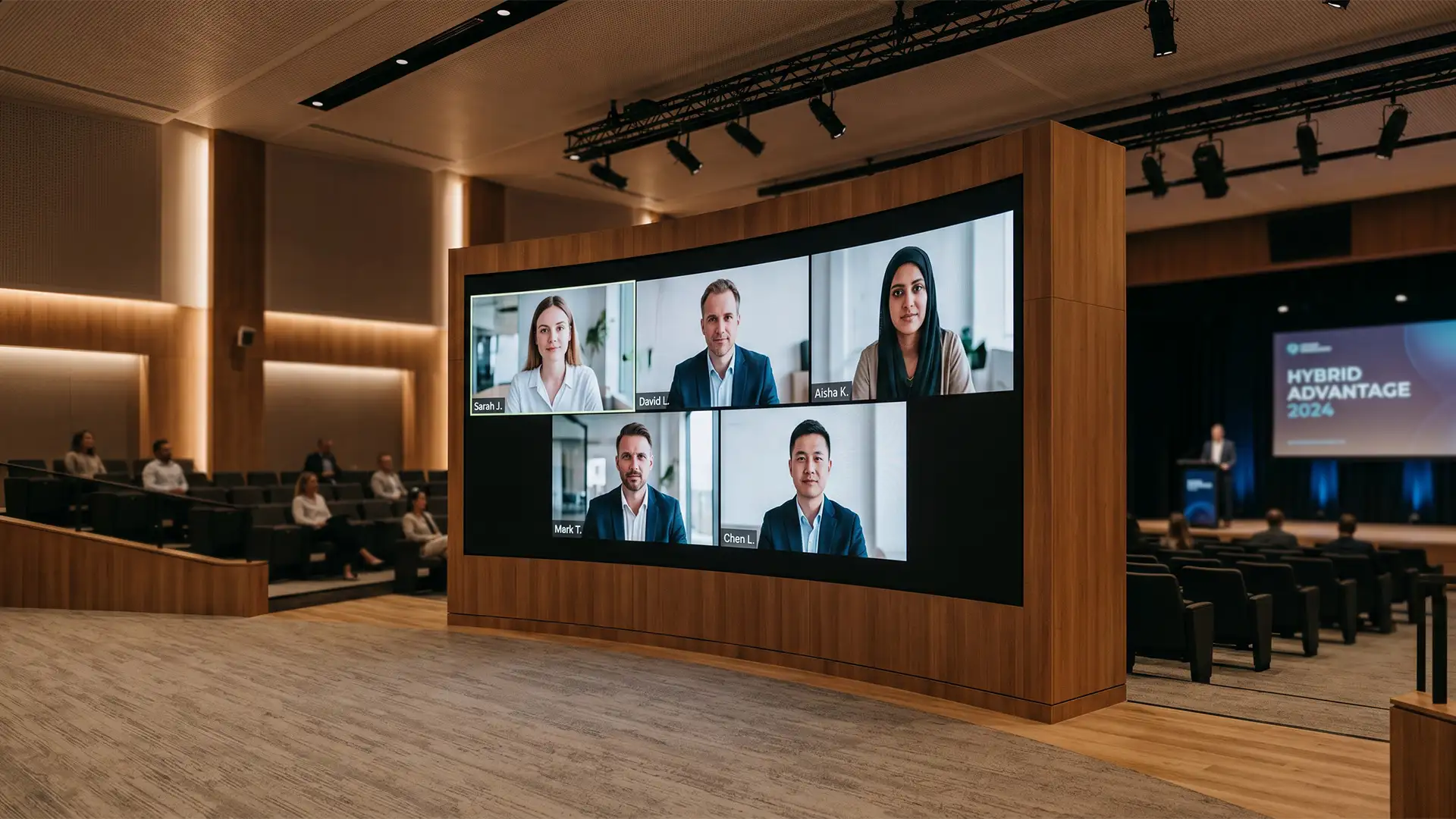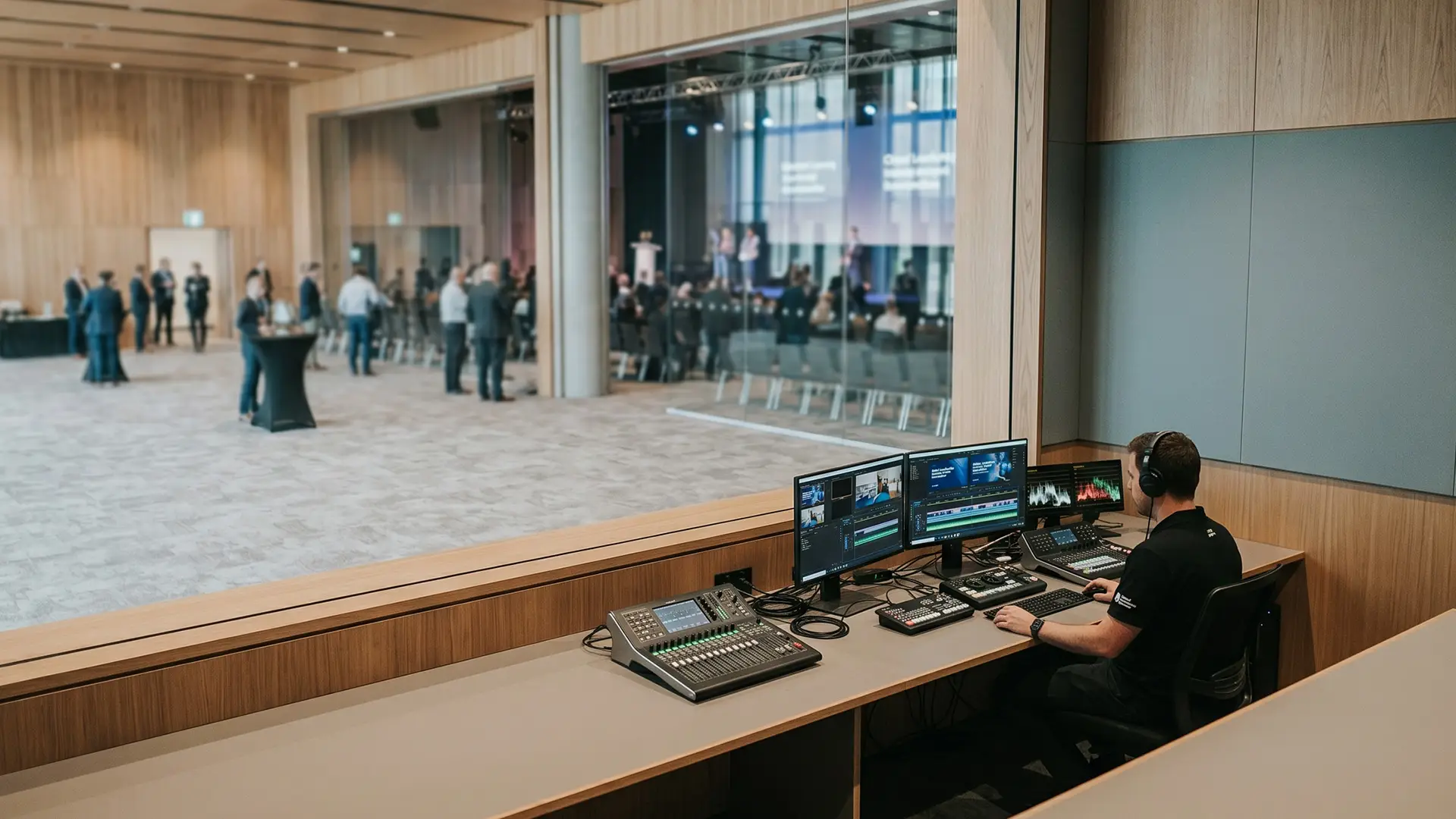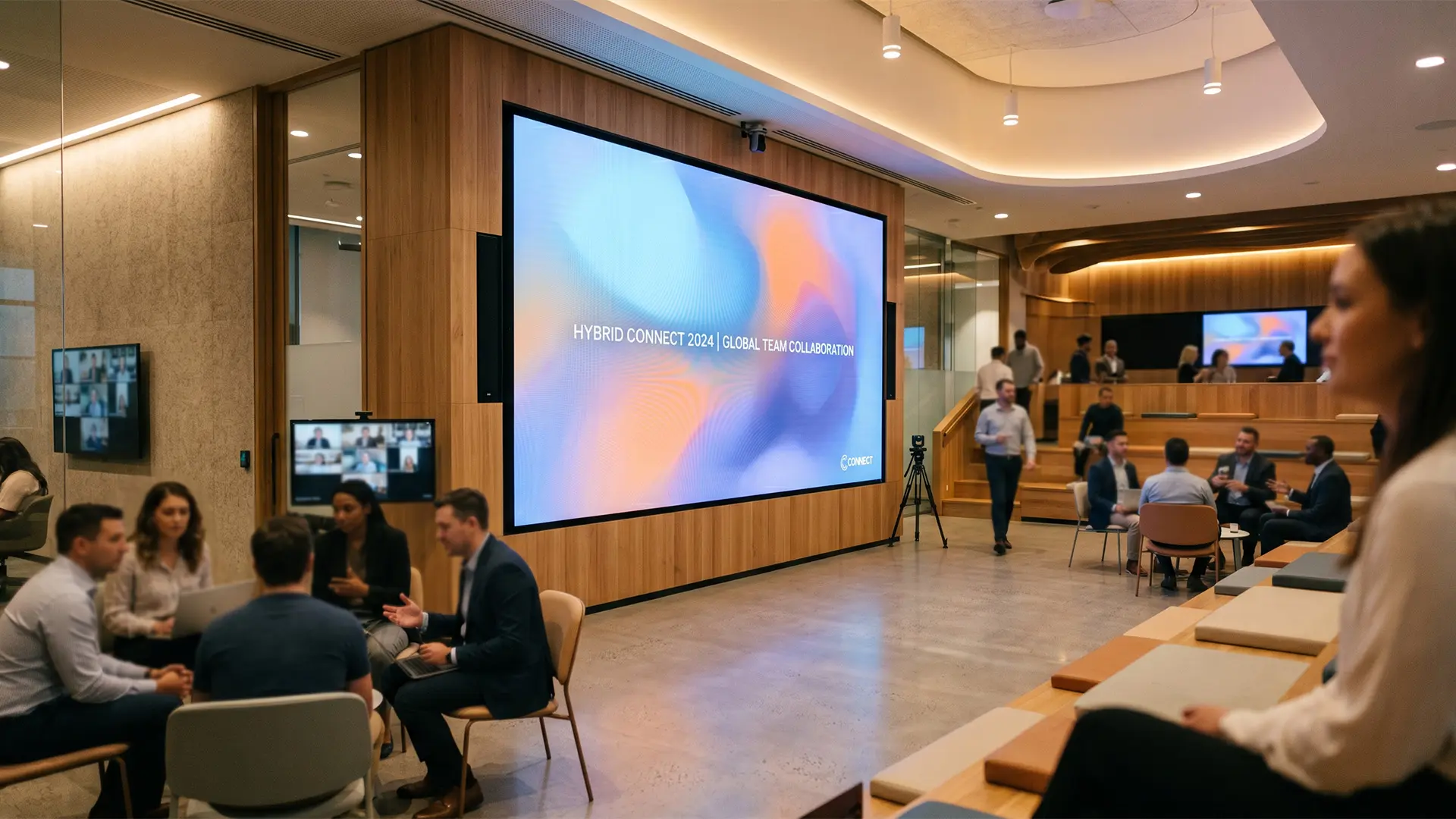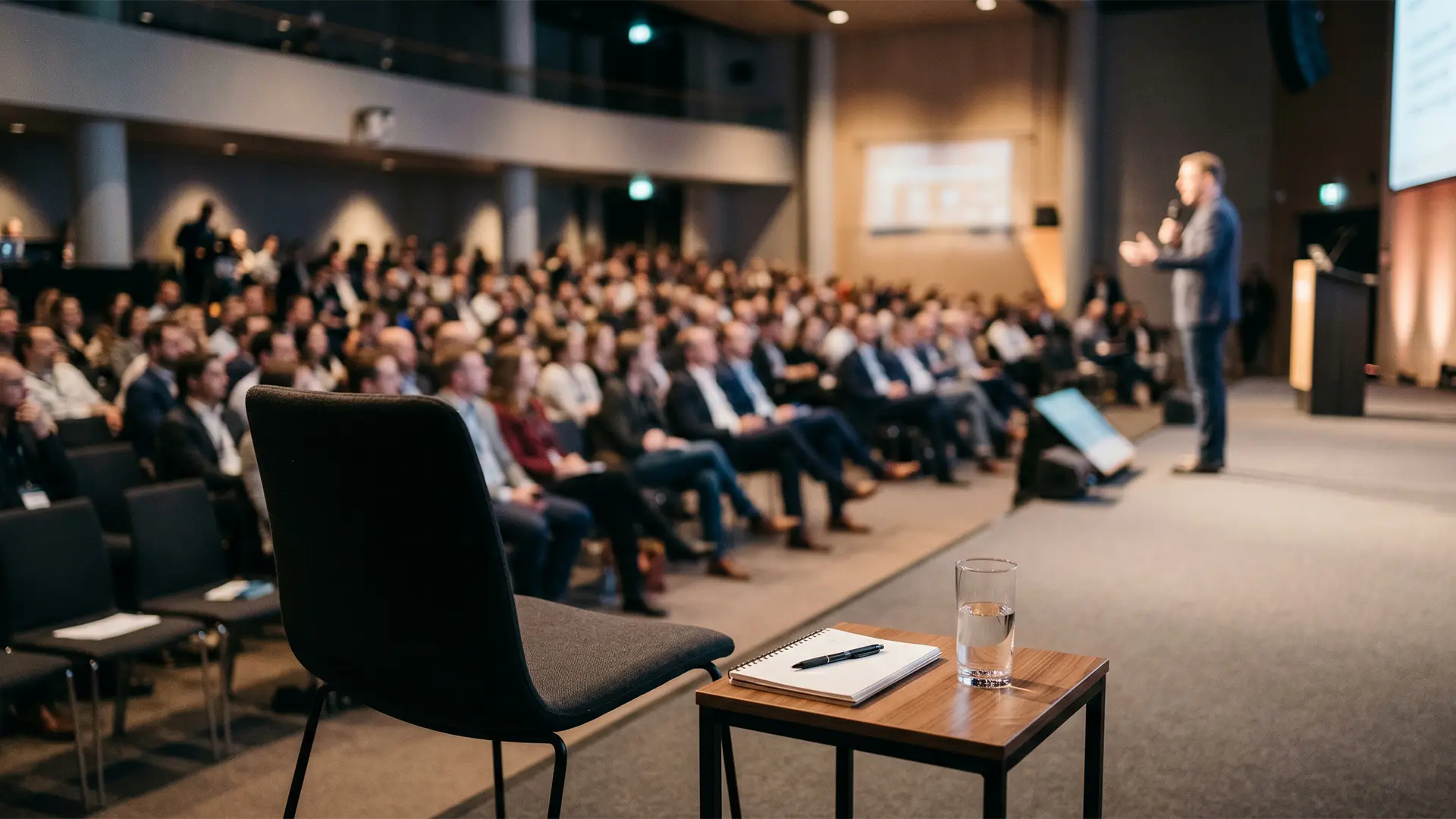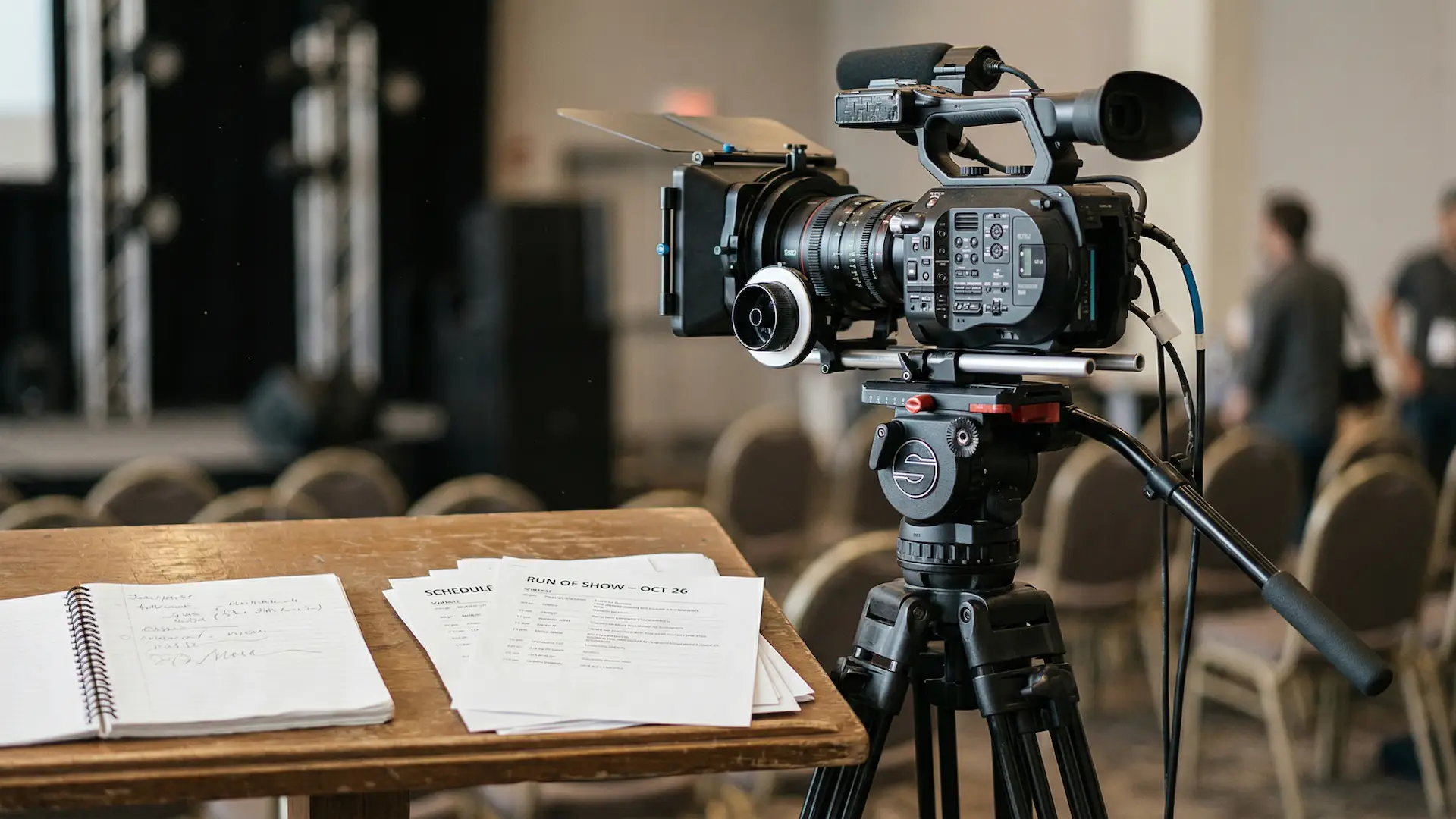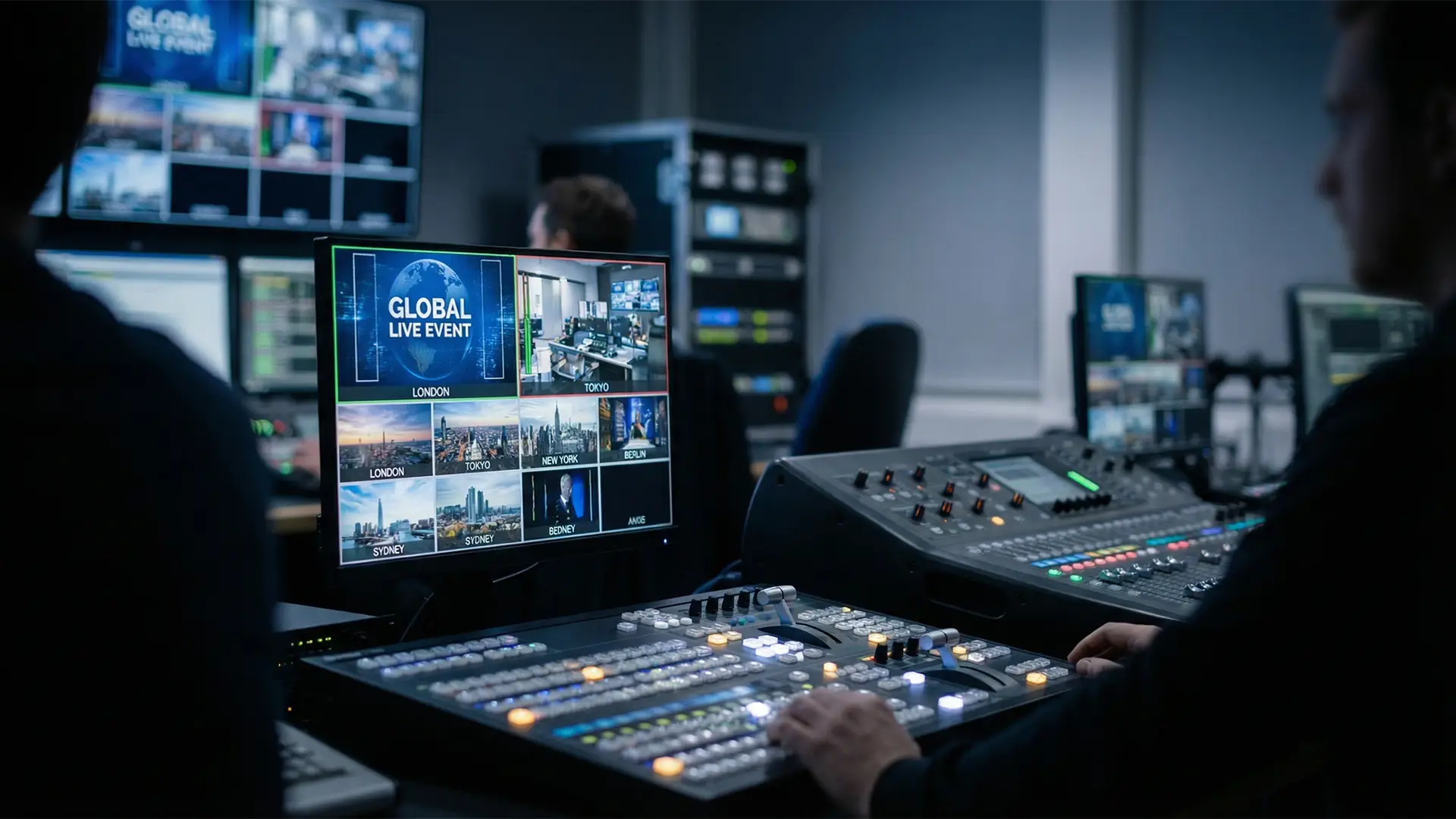
You’ve seen it before. A company broadcast connects people across different sites, but each location feels slightly out of step.
One office looks sharp and sounds clear. Another struggles with audio lag. Somewhere else, the picture keeps freezing.
That’s what happens when a multi-location broadcast isn’t built around consistency. Each place does its best, but without a shared framework, quality and style drift apart. And when that happens, the experience feels uneven for everyone watching.
It’s meant to be one event, yet it feels like several bits randomly stitched together. You may have employees in Singapore, Oman, France and Australia all needing that vital company update but the cost to fly them all to one location could be in the tens of thousands.
At Paradigm Creative, we help teams bring everything together, so every viewer, wherever they are, feels part of the same story.
The challenge: too many moving parts.
When different teams or local suppliers handle their own broadcast setups, things quickly become messy.
Equipment varies.You could be in the middle of a field with a fluctuating internet speed. Presentation styles don’t match. People lose interest as they don’t feel connected to what’s being presented.
Before long, each location develops its own look, tone, and rhythm. The result isn’t just a technical issue. It affects how your message lands.
When viewers see and hear inconsistency, it sends a signal that the organisation isn’t fully connected. It can make even the most polished content lose its impact.
That’s why getting the structure right matters as much as getting the message spot on.
Bringing it together
A production approach that connects every location into a single, well-run broadcast is paramount.
Our goal is simple: make your communication clear, confident, and consistent, no matter how many sites are involved.
Here’s how we do it…
Consistent visual design.
Your brand should look the same wherever it appears.
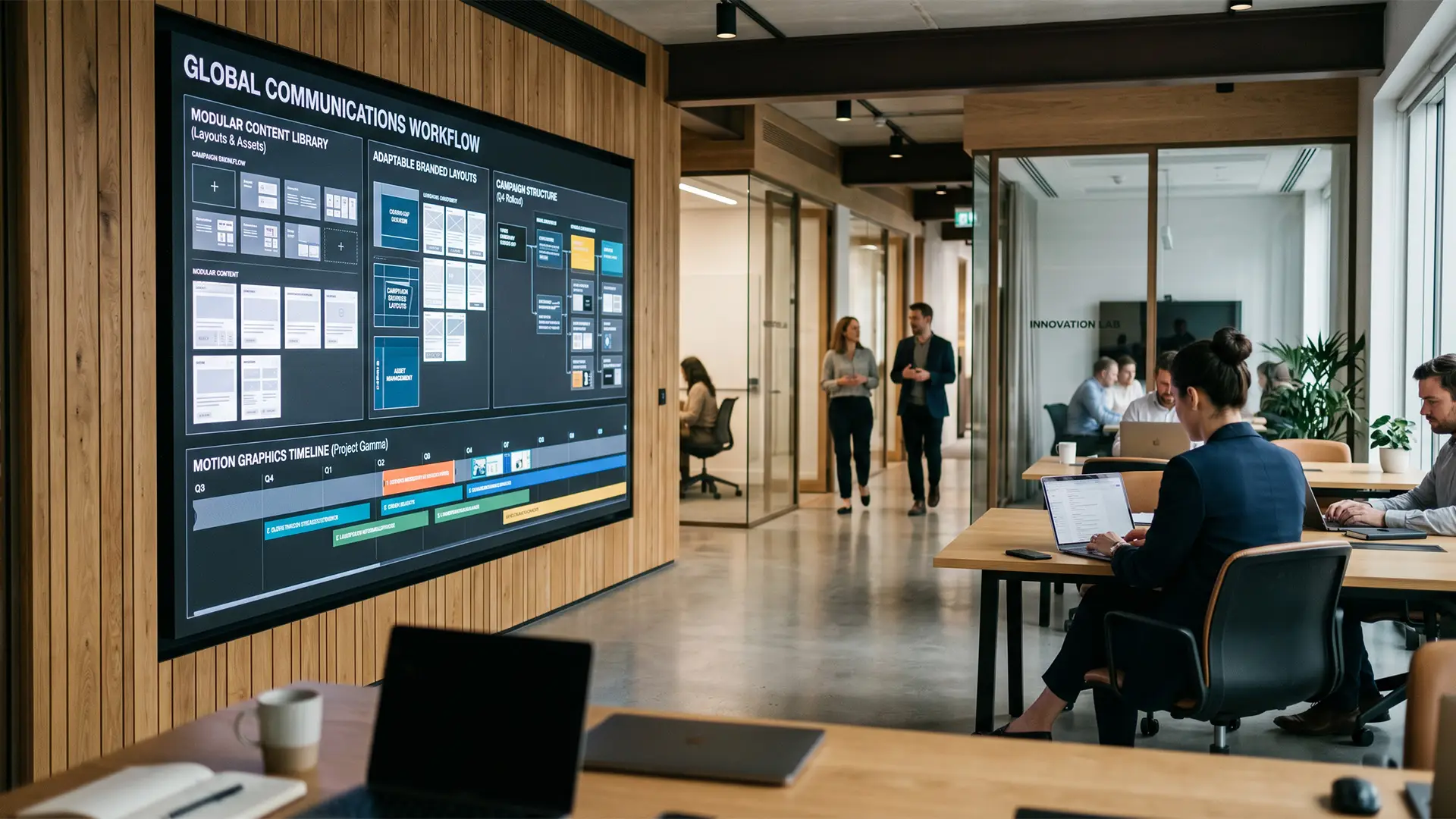
A single set of visual elements - titles, colours, transitions, and graphics - should appear across every location. It’s a simple way to keep your identity strong and your production easy to follow.
It also means no more jarring changes between speakers or slides. Just a steady, unified style that builds trust.
Planning before production.
A great live event starts long before the cameras roll. We run detailed checks with every location before the day. We test cameras, lighting, framing, and internet connections. We can brief speakers, review slides, and run short rehearsals.
This means everyone knows what’s expected, and there are no surprises - like random fire alarm tests or abseiling window cleaners dropping down into shot - when the broadcast begins.
By the time you go live, each site is ready and connected, and the focus can stay on delivering the message.
Redundancy is key
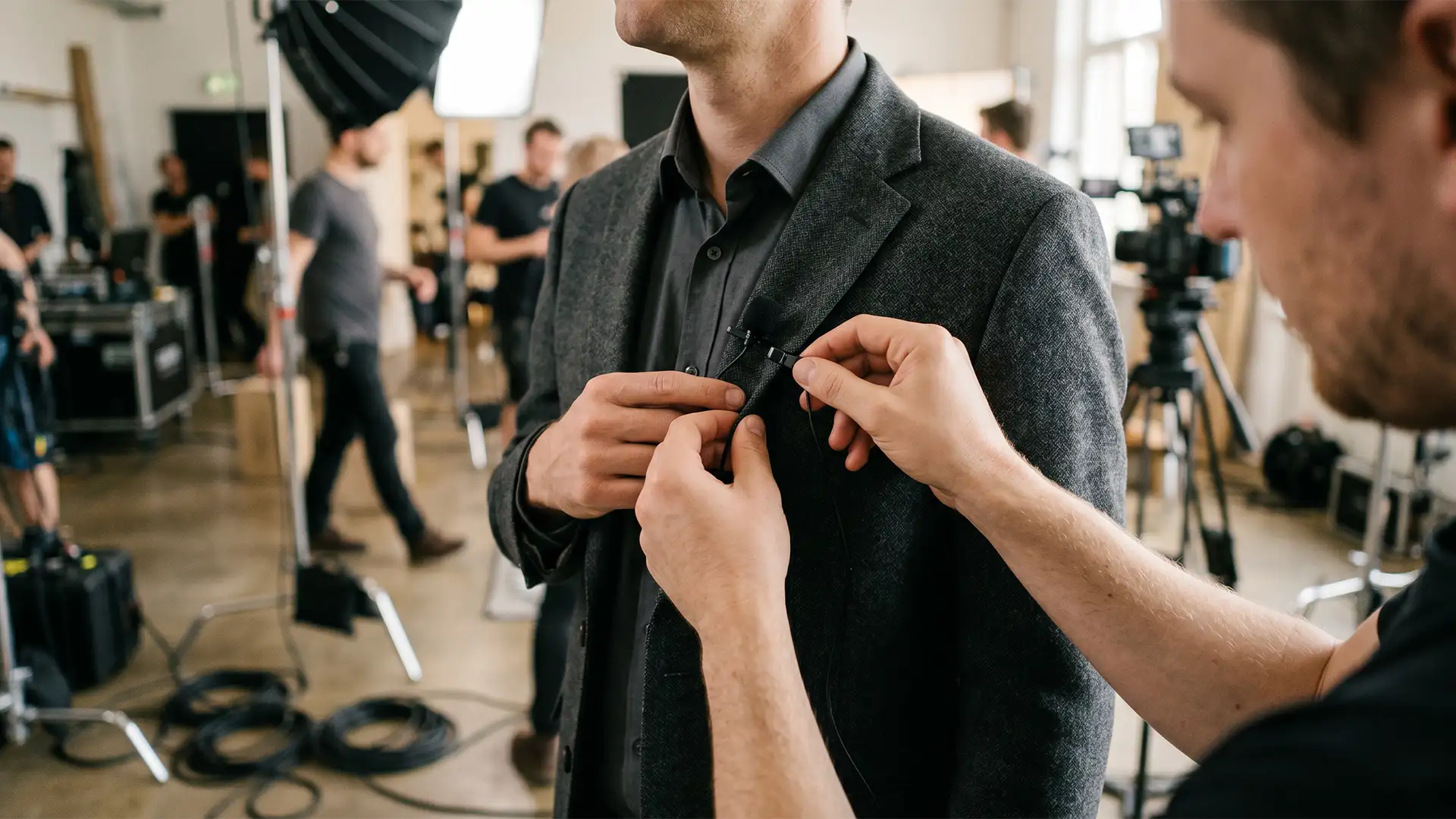
When you’re running a live event, you need to plan for what might go wrong and decide what level of risk you’re comfortable with. For example, we always keep a couple of handheld mics to the side as backups. If you’re using ten microphones, it’s not realistic to double up on every one unless the event demands total redundancy - like on TV broadcasts where each presenter wears two mics so there’s always a spare live feed.
We've been in situations where we've asked for a wide internet connection, but it’s not worked when we got there. So we also consider and plan for alternative options.
We often run backup machines that can take over instantly if something fails. The goal is to look at the entire system, identify where problems are most likely to occur, and build in the right level of backup - matching the mitigation to both the budget and the level of risk you’re willing to take.
Local teams, global consistency.
We work with trusted technical partners around the world who understand local conditions. WIth one client, filming abroad, we brought in a local fixer to handle translation, transport, and logistics and a local camera operator, who understood the setting and style expectations
That gave us the flexibility to manage on-site details while keeping full creative and production control. It’s a setup that respects regional differences but still delivers one coordinated experience.
On shoots where we’ve had non-English speakers, we’ve scrapped long interviews and instead, given them short, written scripts based on a Skype call, recorded voiceovers and pieces to camera in short bursts, which worked much better in a concise, compelling two-minute video, which could then be shown on a live stream.
Clear flow from start to finish.
Structuring your broadcast like a story is everything.
Each segment, transition, and cue is planned to create a smooth rhythm. Speakers know when to start and when to hand over. And crucially, the audience can follow every moment without confusion or delay.
If you want people to engage and interact or workshop and brainstorm and collaborate then face-to-face is probably the best but understandably not always possible, especially when teams may be abroad. So keeping sections snappy and short, lively - even funny - and interesting is the way to go.
When everything flows, people stay focused on the content - not the connection.
Why this matters.
When your communication looks and sounds consistent, people notice. Your message feels stronger. Your presenters come across with confidence and teams feel connected, not divided by distance.
It also strengthens how your brand is perceived. A professional, steady broadcast says that your organisation is organised, prepared, and united.
That confidence carries through every layer of your communication from leadership updates to large-scale public events.
That's a wrap.
If your multi-location broadcasts feel uneven, it’s probably not your people or your message - it’s the way the event is being produced.
When you bring everything under one clear, connected system, your message lands better. Your teams feel included. And your brand looks exactly the way it should.
So plan, connect, and manage every part of your broadcast so it feels like one event, wherever it’s seen.
Bring clarity and consistency to your next company-wide broadcast and make every location look and feel like it’s part of the same room.
Share this insight:
Link copied