Live streaming is now central to how organisations communicate with internal teams, clients and wider audiences.
But even the most well-oiled system can stumble.
When your live stream goes dark or your presentation stalls, the damage isn’t just technical - it can risk your reputation, your audience’s trust, and the value of the event itself.
You can’t eliminate all risks. But you can design your systems and your response so the failure becomes a recoverable hiccup, not a disaster.
Inevitability of failure.
It may feel uncomfortable to admit, but no technology stack is foolproof. Even enterprise-level broadcasts can suffer from cable breaks, hardware malfunctions, software bugs, network issues or someone walking into the back of shot at the wrong time.
A lack of redundancy is one of the most frequent causes of failure in corporate live stream broadcasts.
In broadcast and live environments, engineers speak of “single points of failure” - elements whose failure brings the entire show to a halt. The solution is to duplicate or parallel key paths so the show remains live if one route fails.
Without that kind of automatic backup, a failure - even brief - can pull the rug out from under a presentation.
Understanding the client’s ecosystem.
Before you propose any streaming or event architecture, you must understand the client’s technical and compliance environment.
In large organisations, the toolsets they permit are shaped more by IT policy than by creative preference. For example, if your client already runs Microsoft 365 at scale, introducing a new video tool that hasn’t been security-cleared may be a non-starter. Getting new software certified in tightly regulated industries like finance or healthcare can take months.
That constraint doesn’t limit you; it guides you. Use existing platforms in novel ways. Work with what is already approved and secure.
If you must propose something new, plan for the approval process. Always ask: is this tool already allowed? Does it pass GDPR and data-security checks? If not, do you have a back up plan that does? When you align with the client’s ecosystem instead of fighting it, you increase your stability, your speed and your credibility.
Structuring people and responsibilities.
A live event is a system of systems. Video, audio, switches, routing, encoders, internet links, slide machines and more all depending on one another.
When something fails, you cannot afford to stop the whole show to troubleshoot. The only way to keep going is to have clearly defined roles, deep specialism, and a technical lead who sees the whole flow.
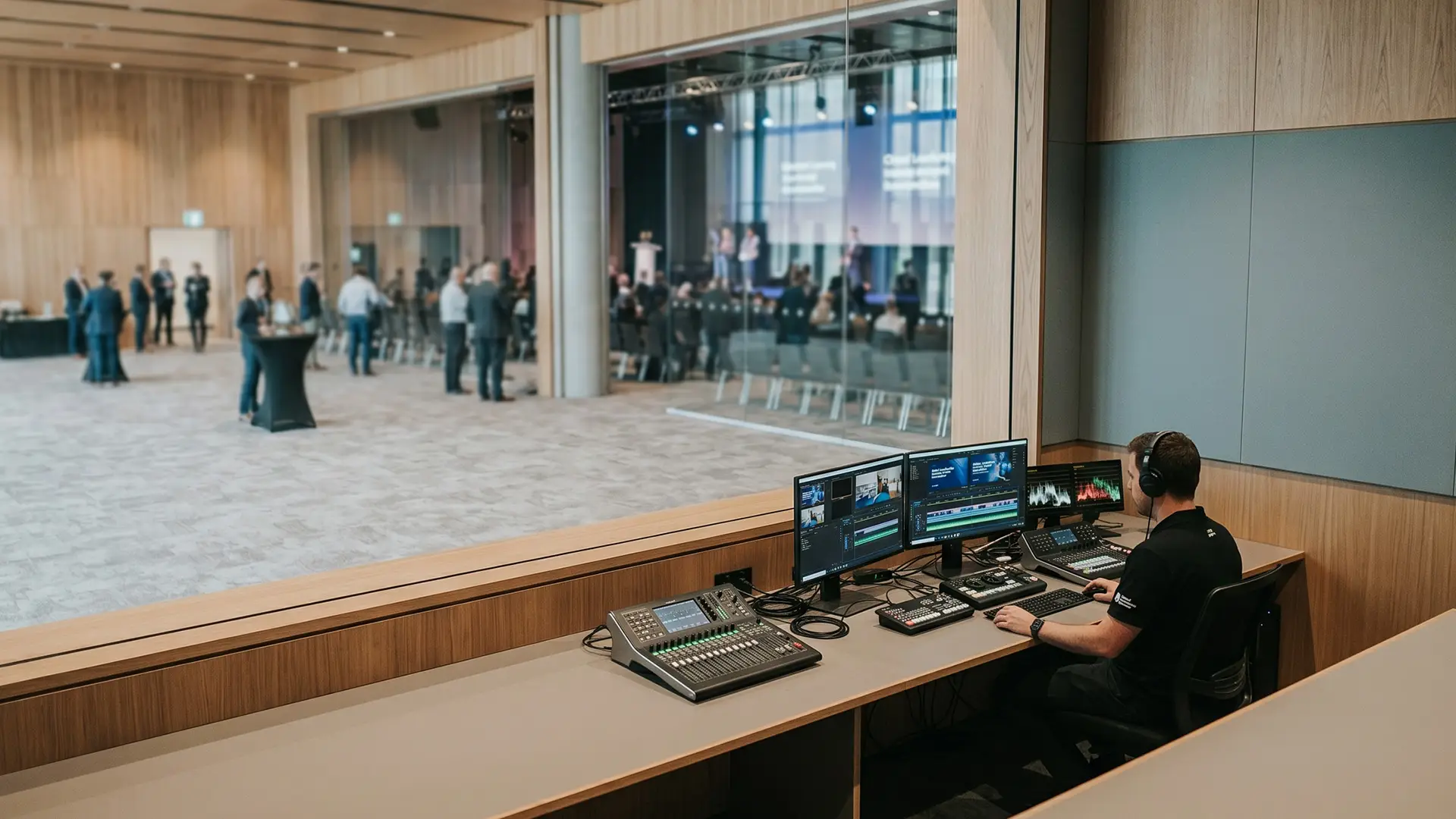
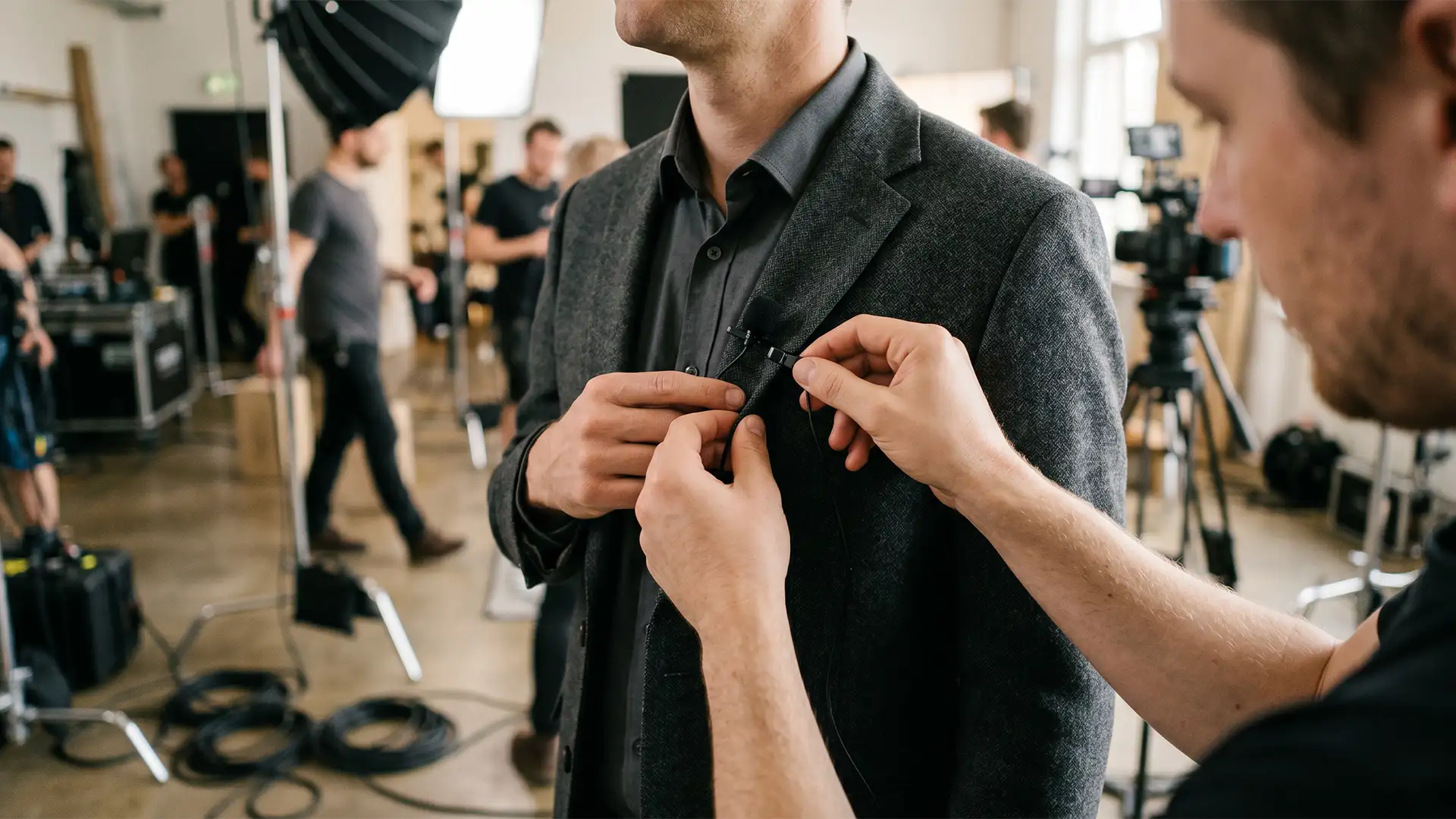
You want every operator to own a discrete component - the camera, the switcher, the audio, or the autocue, for example. That person must know how to isolate and repair or swap that component under pressure and cannot be distracted by anything else.
Above them sits a technical manager whose job is to maintain a holistic view, coordinate fallback options, and prioritise fixes so the show keeps running.
In a well-run production, you might not always see every technician working at all times. That’s by design. Their presence is insurance. If a camera input dies, that operator quickly switches to a backup input with minimal disruption while the rest of the system adapts around them.
Building redundancy into the system.
Redundancy must be more than a theoretical plan. You must physically build duplicate systems at every critical point.
For example, during rehearsals at a studio, we once discovered intermittent dropouts on the wired network. We brought in a bonded 5G modem plus Starlink. Traffic was spread across multiple networks so that if one path failed, the show stayed live.
In remote broadcasts such as a construction site or an outdoor stage, the internet link is your greatest risk. Redundancy there is non-negotiable.
When you put in the redundancy, test it. It must act seamlessly, without manual intervention. You want the backup path to take over within milliseconds, without the audience ever perceiving the interruption.
‘Working the problem’.
Even with all preparation, unexpected surprises arise. In one high profile broadcast, we’d tested all the equipment and rehearsed every scenario. But when we went live, the audio feed from the desk failed. Because we had a backup plan, we switched to pulling the mix from a camera feed instead and carried on. The show never stopped.
Another time, presenters in “work from home” mode had interruptions. We saw a child wander in mid-session. Because we’d already designed flexible layouts and tight visual crops, we masked the distraction almost instantly. The presenter didn’t miss a beat and the audience barely noticed.
The ability to stay calm, understand where the failure lies, and implement a fallback strategy is everything. That ability comes from rehearsals, processes, and the right team.
Narrative matters in crisis.
When a stream flickers or goes offline temporarily, your audience’s perception is as important as the fix. You have to control the narrative. You don’t want silence.
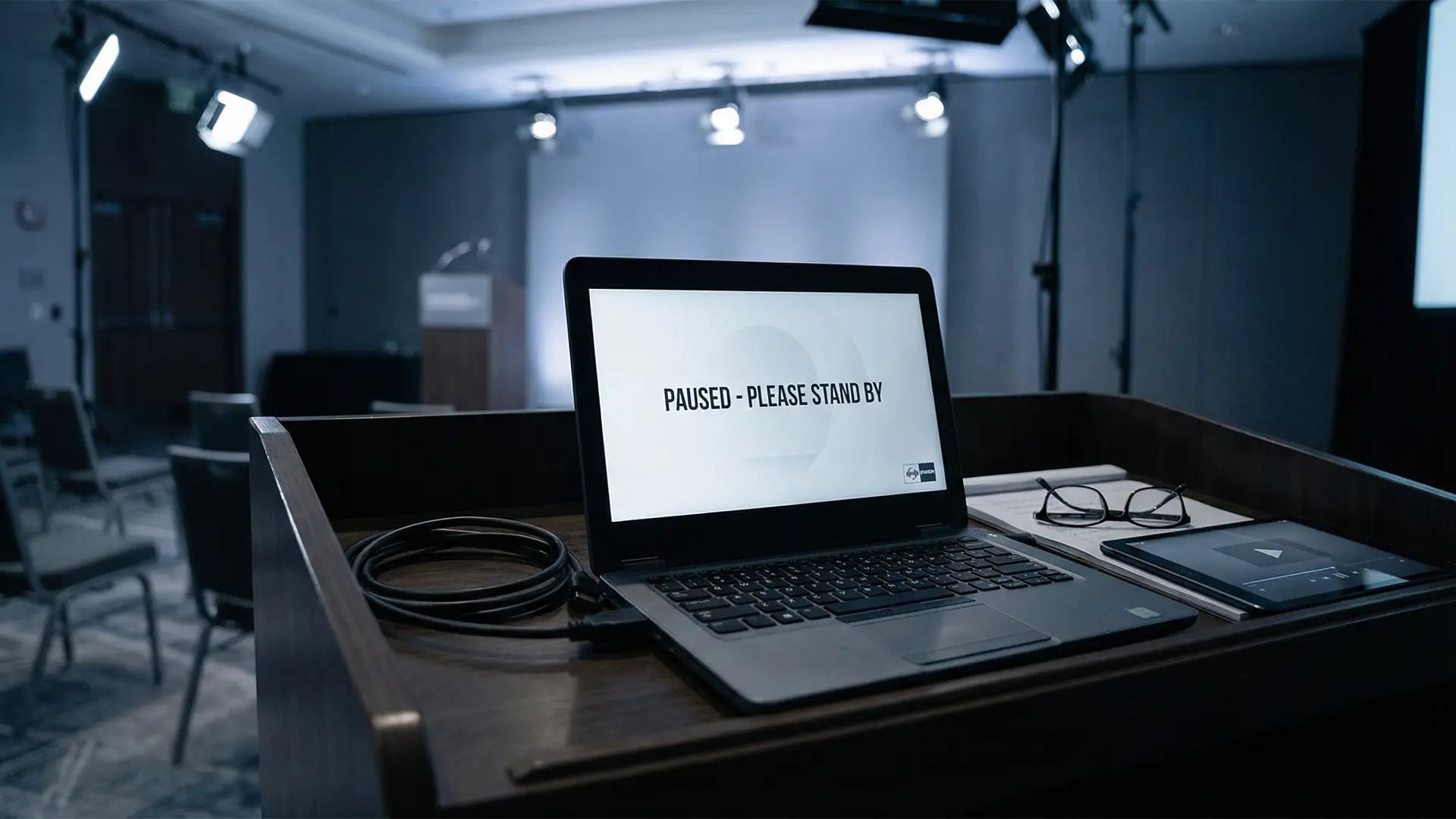
Sometimes you slip in an interstitial graphic, a holding slide, or an apology message while you bring a backup online.
Having a host or compere who’s briefed on what to do in the event of something going down, a backup VT or other ‘fill’ content prepared to cover any gaps makes the world of difference. Having audience questions prepared can be a great stop-gap whilst an issue is fixed.
If the failure lasts longer than a few seconds, address it live - “we’re having a technical issue, please bear with us.” That transparency is better than pretending nothing happened. You regain trust by dealing with the issue openly, credibly and quickly.
That's a wrap.
A live presentation going dark does not have to become a catastrophe. What matters is your preparation, your structure, your team, and your ability to respond in real time.
Technology fails, so building your systems with real redundancy, testing them under pressure, staffing each component with specialists, and always having a fallback plan ready gives everyone reassurance.
Understand your client’s infrastructure and compliance constraints and build within them. When something goes wrong, stay calm, diagnose quickly, and switch to backup without losing momentum.
If you’re in charge of streaming, events, or communications, ask yourself: do I have a tested plan for when the stream dies? If the answer is no, now is the moment to build one.
Share this insight:
Link copied